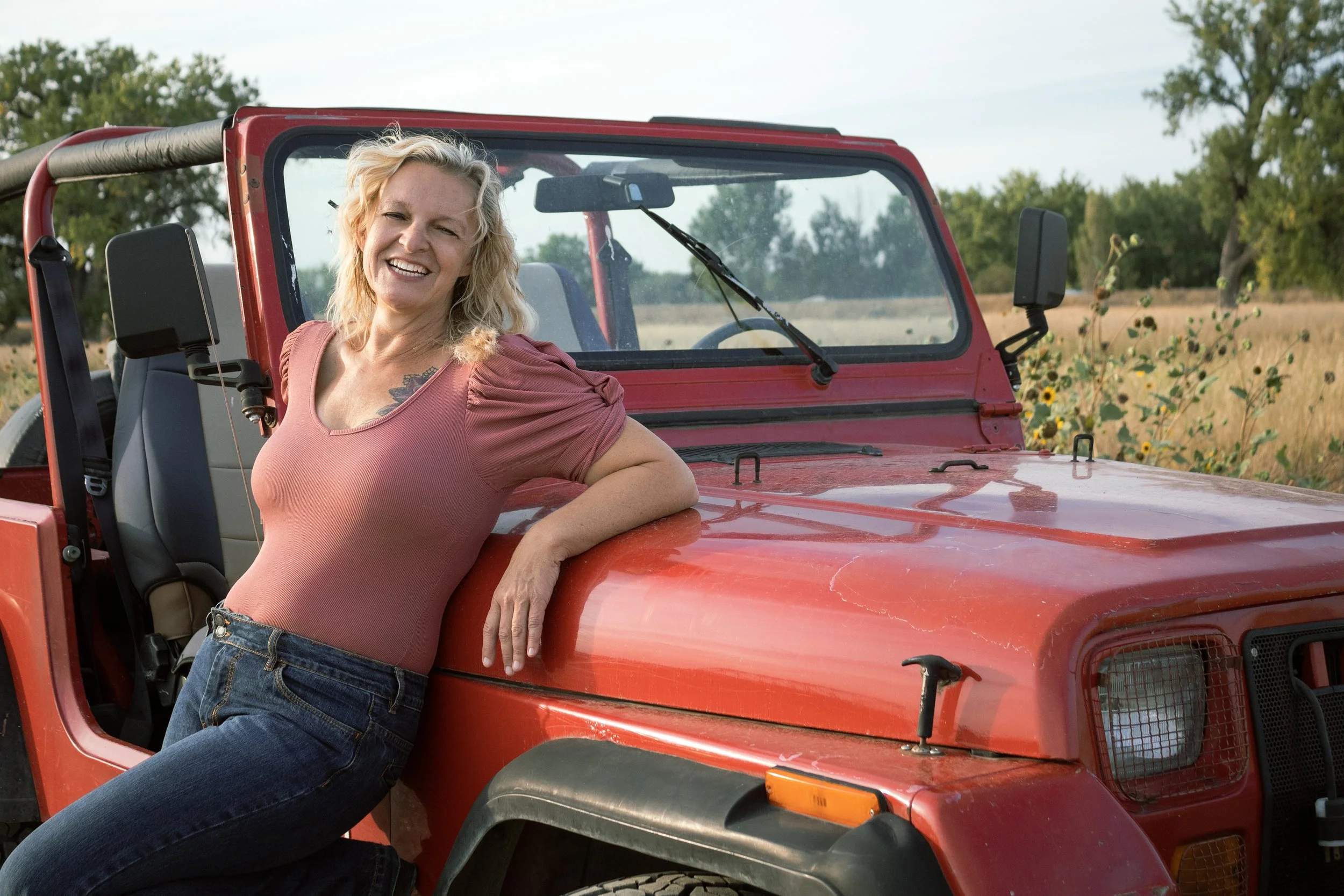
By Teresea Olson | September 27, 2026
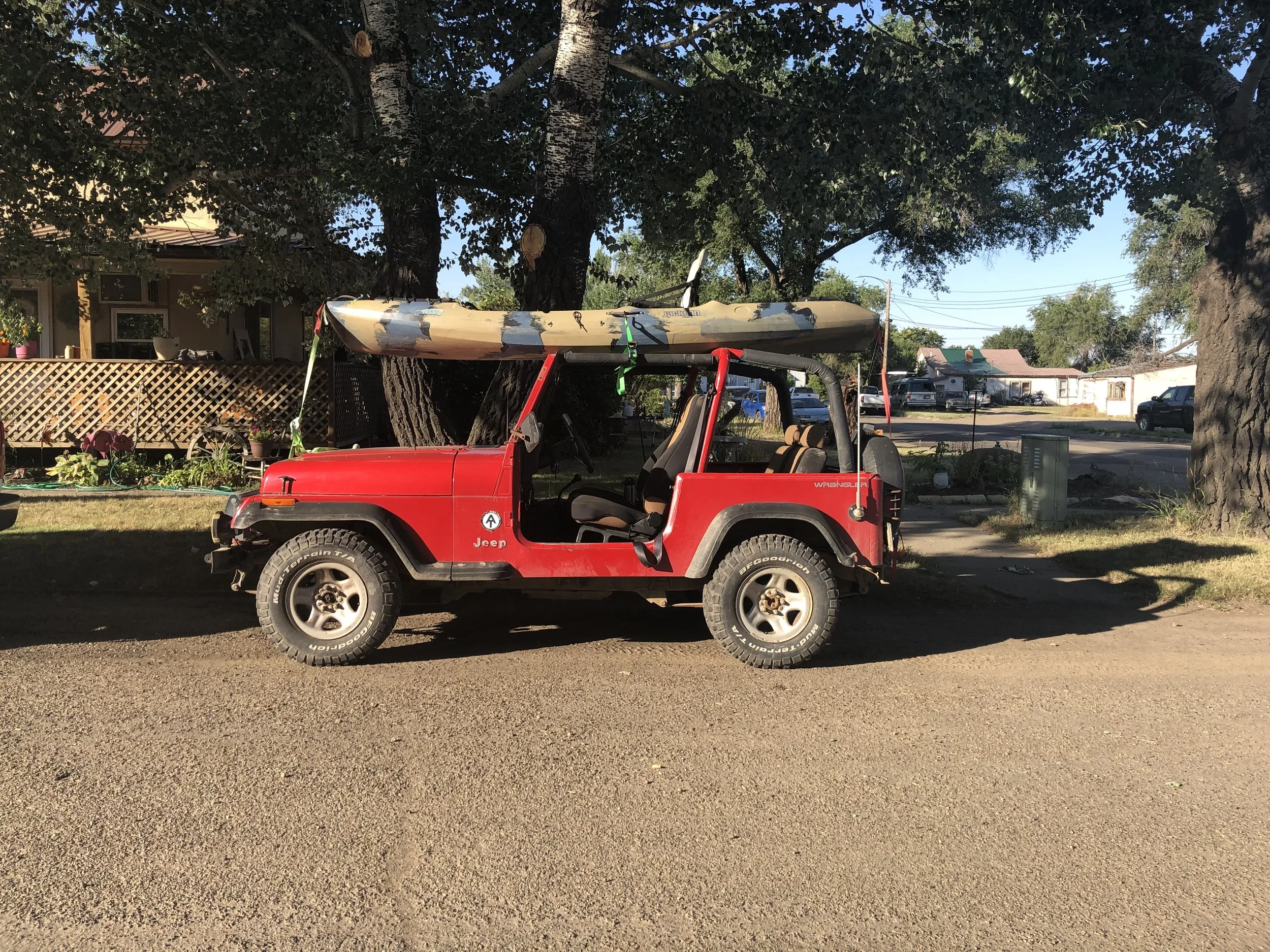
Photo by Teresea Olson
“Preparation matters because the Yellowstone is beautiful- but she can also be sneaky.”
At 6:30 Sunday morning, September 27, I pushed my kayak into the Yellowstone River at Fallon, Montana, and started the roughly 30-mile journey back to Glendive.
The temperature was somewhere in the 40s, and the river and surrounding countryside were just beginning to emerge from the early morning light. It would eventually warm into the upper 60s, but when you are alone on the Yellowstone in late September, you dress for more than the forecast.
I paddle in layers and carry extra clothing carefully packed to stay dry. That lesson was learned the hard way. Twenty-six years ago, an ill-fated river adventure landed me in the emergency room with hypothermia. I have never forgotten it.
These days, especially because I enjoy paddling alone, I prepare for the possibility that a simple day trip could turn into an unexpected night along the river.
A personal locator beacon goes with me, along with extra food and water, matches, first-aid supplies, emergency shelter and enough gear to handle a change in plans. And in Montana, don't forget to check your licensing requirements before you go. A Montana FWP Conservation License is required to access most state lands, including fishing access sites.
Preparation matters because the Yellowstone is beautiful- but she can also be sneaky.
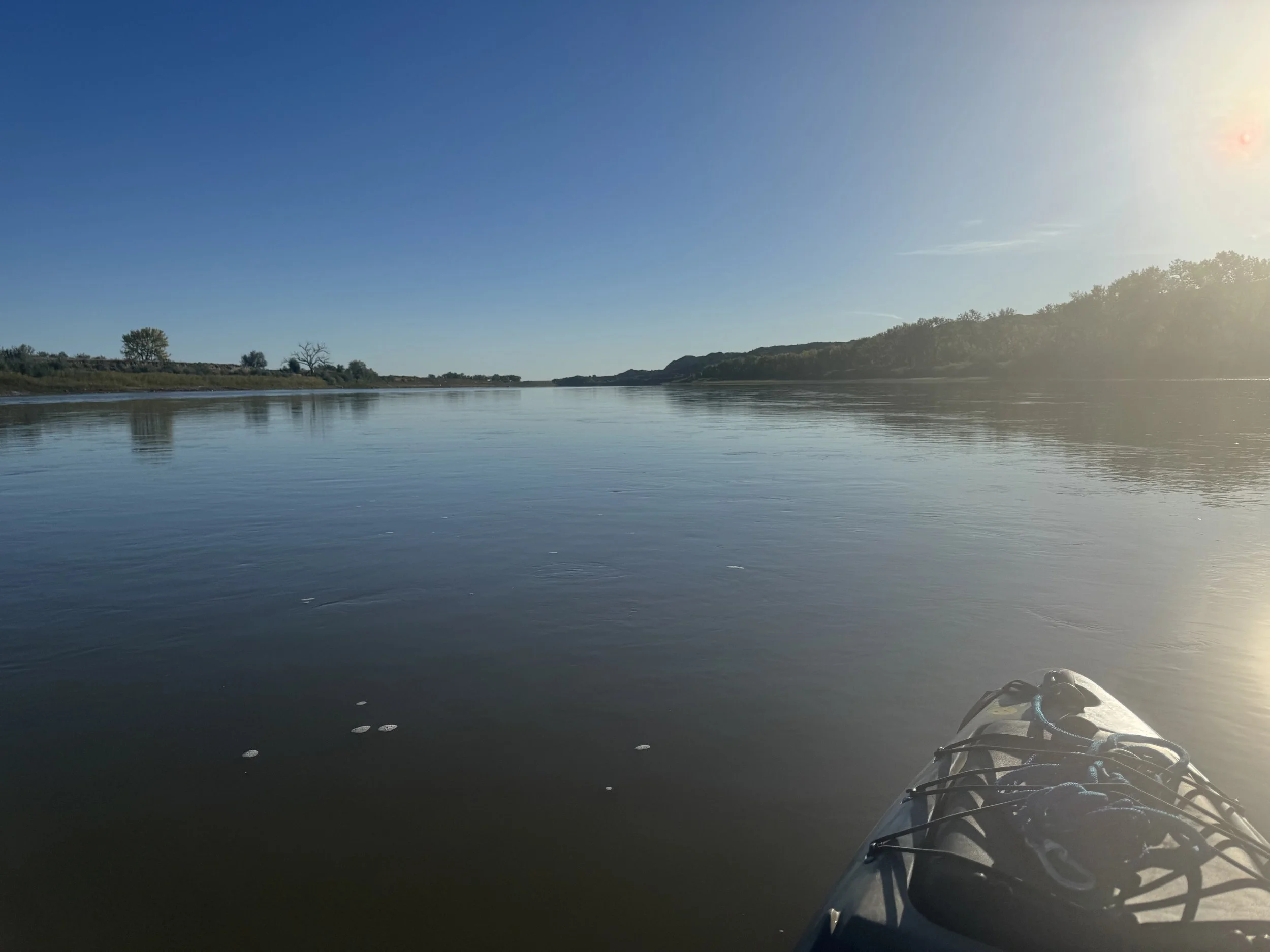
Photo by Teresea Olson
For nearly ten hours that Sunday, I had the river almost entirely to myself. I didn't see another person until I was getting close to Glendive.
There is something about eastern Montana that always takes my breath away. Maybe it is the combination of sky and water. Maybe it is the Badlands rising beyond the river, the clean air, the wildlife or simply the enormous amount of space.
Out there, there is time to think. And time to pray.
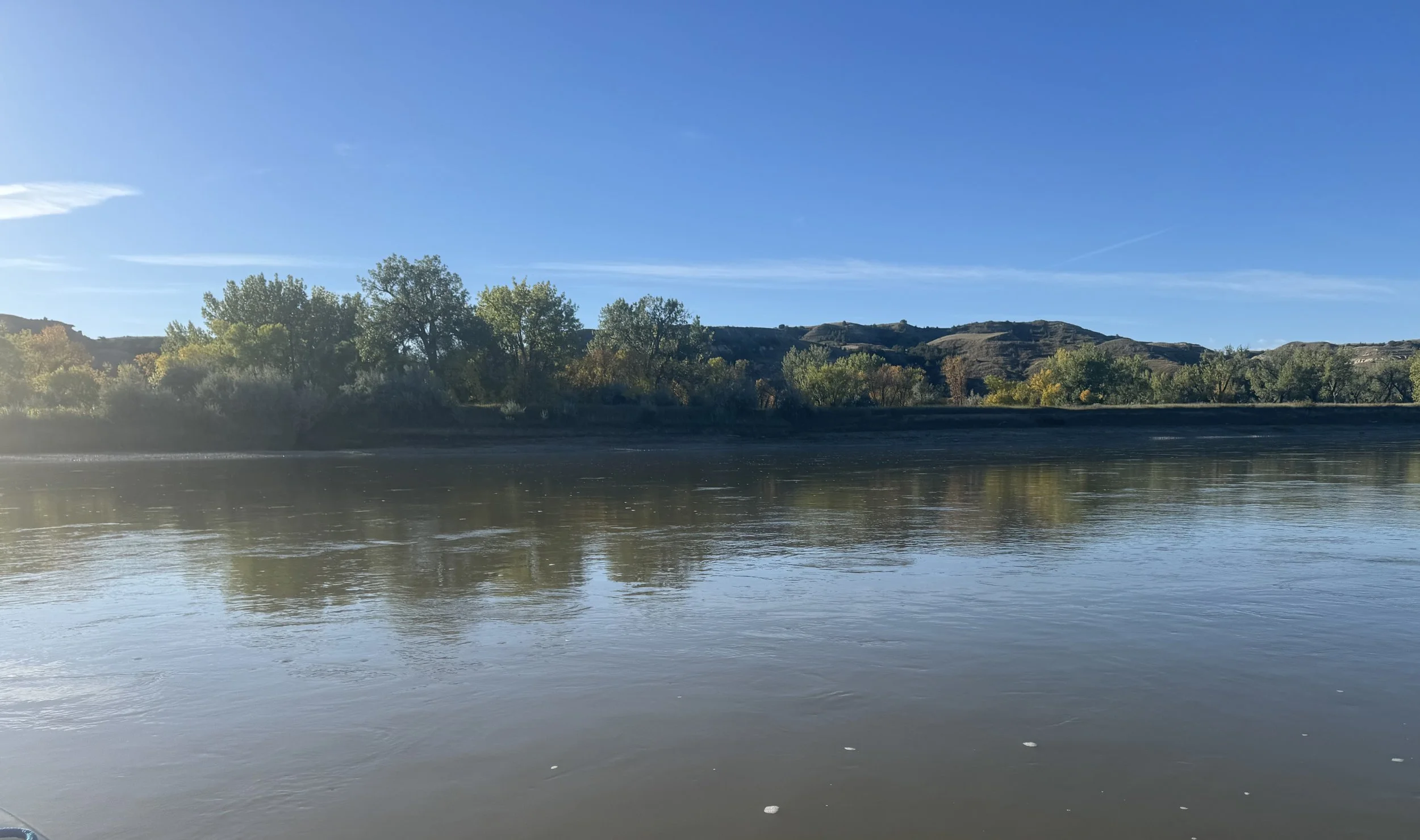
Photo by Teresea Olson
The river winds between islands and around bends that seem to open into completely different worlds. Around one bend there may be rugged Badlands. Around another, cottonwoods and quiet water. Occasionally there is a house or another structure tucked along the landscape, but for long stretches the feeling is one of remarkable isolation.
Fish jump alongside the kayak. Geese announce themselves overhead. Deer appear along the shoreline. And the Yellowstone just keeps winding eastward.
Every bend is another picture. Another view. Another little piece of eastern Montana most people traveling down the interstate will never see.
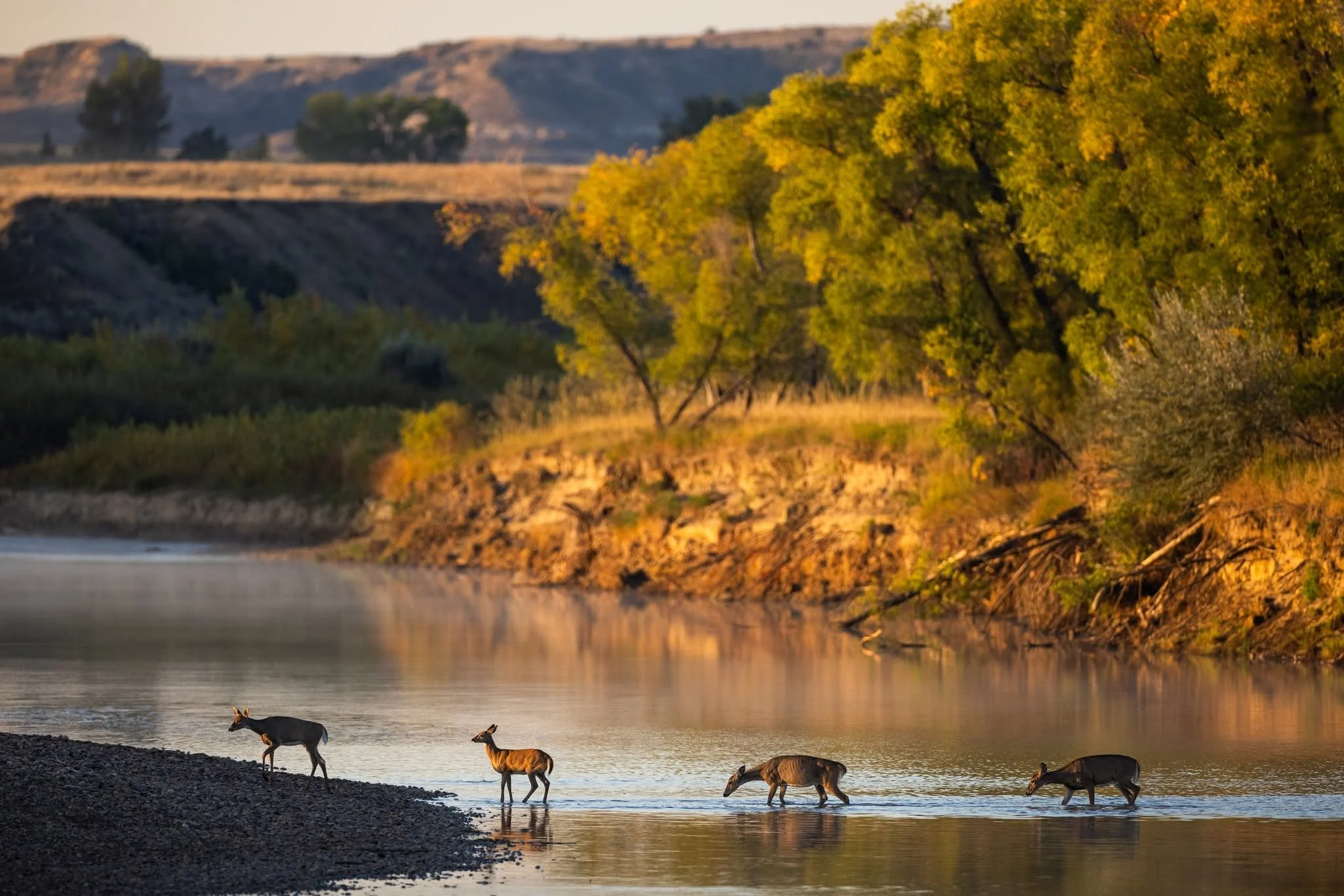
Photo by Ashton Jones
But beautiful does not mean predictable. You have to pay attention. There are rocks and downed trees, little branches barely peeking above the surface and currents that don't always behave the way you expect. There are whirlpools, shifting channels and islands that force you to choose a path.
Then there is the mud. Anyone familiar with eastern Montana knows exactly what I mean by gumbo. A shoreline that appears solid from the kayak can become something entirely different once you put a foot on it.
Wind is another consideration. A headwind can turn an already long paddle into a much longer one, and waves can build surprisingly quickly on an open stretch of river.
The Yellowstone demands respect. That may be part of what keeps drawing me back.
The river has a personality, and that personality changes with the seasons. Water levels change. Channels shift. Islands change. Wildlife changes. Even a familiar section of river never looks exactly the same twice.

Photo by Ashton Jones
As I worked my way closer to Glendive, civilization began announcing itself in one of my favorite ways. Long before I could clearly see the bridges, the old GTA tower began winking at me through breaks in the trees and between the islands. There it was. Then it disappeared. Around another bend, there it was again.
For someone who has spent most of the day surrounded by river, sky and Badlands, that tower becomes a pretty welcome landmark.
Eventually the bridges begin to appear- the Black Bridge, Bell Street Bridge and Towne Street Bridge- and you know you are coming home.
Paddling through Glendive gave me one more surprise. I caught a glimpse of the new mural beginning to blossom across the GTA tower. From the river, with the late-day light, trees, bridges and water surrounding it, it was beautiful.
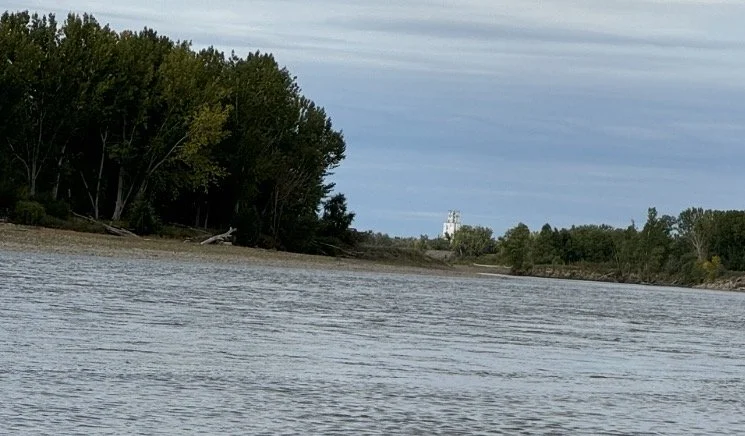
Photo by Teresea Olson
It also made me think about how many different ways there are to experience Glendive and eastern Montana. You can drive through it. You can hike it. You can bike it. Or you can climb into a kayak early on a September morning and let the Yellowstone show it to you one bend at a time.
About ten hours after launching at Fallon, I pulled the kayak from the river and loaded it back onto the top of my old Jeep. I was tired. I was chilled. And I was incredibly grateful.
Grateful for a safe trip. Grateful for nearly an entire day of solitude. Grateful for jumping fish, honking geese, deer along the shoreline and miles of Badlands reflected in the Yellowstone.
Mostly, I was reminded once again that some of eastern Montana's greatest treasures aren't necessarily places you arrive at. Sometimes they are the miles in between.
And sometimes the best view of home is the one you get after paddling thirty miles to get there.